The G1 Test Is Offered in 32 Languages. Here Is the List.
Plus the audio option that almost nobody writes about, and what to do when your language is not on the list.
Greenhorn Driving School
Published August 19, 2026 · 9 min read

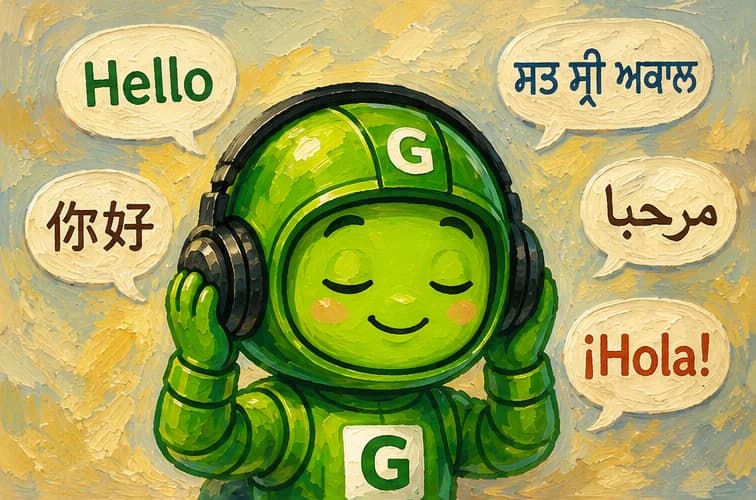
If English is not your first language, the single most useful thing to know about the G1 knowledge test is that you probably do not have to take it in English. The computerized test is offered in 32 languages, and every computerized kiosk can read the test aloud to you.
Almost nobody publishes this accurately. The lists that rank for this question tend to name about 16 languages, include one that is not offered at all, and leave out 17 that are. So here is the actual list, copied from DriveTest in its own spelling, with the date we checked it.
All 32 Languages
These are the languages the computerized Class G1 knowledge test is offered in, in DriveTest’s own alphabetical order and spelling.
Computerized Class G1 knowledge test
32 languages
- 01Amharic
- 02Arabic
- 03Armenian
- 04Badini
- 05Bengali
- 06Chinese (Cantonese)
- 07Cree
- 08Croatian
- 09English
- 10Farsi
- 11Finnish
- 12French
- 13German
- 14Greek
- 15Hindi
- 16Italian
- 17Korean
- 18Kurmanji
- 19Ojibway
- 20Oji-Cree
- 21Polish
- 22Portuguese
- 23Punjabi
- 24Russian
- 25Somali
- 26Spanish
- 27Tamil
- 28Thai
- 29Tigrinya
- 30Turkish
- 31Ukrainian
- 32Urdu
Checked against DriveTest’s knowledge test page on August 22, 2026. The list has grown before, from 20 languages in 2017 to 32 today, so confirm with your centre if your language matters to your plan.
Two details in that list are worth reading twice. DriveTest labels the Chinese option “Chinese (Cantonese)” and does not list Mandarin separately. And Badini and Kurmanji, the two Kurdish varieties, appear as separate entries rather than as one “Kurdish” line, so pick the right one.
Cree, Ojibway, and Oji-Cree being on the list is not decoration either. They are offered, and they are three of the entries most commonly missing from the lists you will find elsewhere.
How to Actually Get It
There is nothing to arrange in advance. You walk into a DriveTest centre, and when you register at the counter you tell the agent which language you want. Knowledge tests are walk-in and first come, first served, so there is no booking step where you would have declared this anyway.
The one thing to check is whether your centre has computerized kiosks. DriveTest lists the paper version as available at all locations and the computerized version at some locations, and the 32 languages belong to the computerized test. If the language is the deciding factor for you, phone the centre before you drive over.
The Audio Option
This is the part that goes almost entirely unmentioned, and it is the part that helps the most people. The G1 knowledge test can be read aloud to you. It is not an accommodation you have to qualify for, it is a function built into every computerized kiosk.
That matters well beyond language. If you read slowly, if you have dyslexia, or if you simply take in spoken instructions better than written ones, the audio option is open to you with no paperwork and no diagnosis.

Every kiosk has it
Audio is not a special machine in a back room. DriveTest states that all computerized knowledge test kiosks are equipped with an audio function.

Skip and repeat
You can skip a question and come back, and you can replay a question as many times as you want. The test is not timed either.

No appointment
You do not book it. You tell the agent before you go into the test room, or as soon as you realise you want it.

Headphones sorted
Disposable headphones are provided. You can use your own only if they are wired, non-Bluetooth, with a 3.5 mm jack.
DriveTest does not list any additional fee for using audio, and it does not list any approval step. The only requirement is that you say so before you go into the test room.
The Paper Version, and a Contradiction
Here is where we have to be straight with you instead of tidy. DriveTest publishes two different answers about the paper test, on two different pages, and both are live right now.
The knowledge test page says
Paper versions of the Class G1 knowledge test are offered in the same languages shown above, meaning all 32.
The translators page says
Paper-based G1 knowledge tests are available in 20 languages, and every other paper test is English or French only.
Neither page says which 20 those would be, so anyone publishing a 20-language paper list has invented it. Our advice is simple: aim for a centre with computerized kiosks, because that is the version the 32 languages are definitely attached to, and it is the version with audio. If you need paper in a specific language, call the centre first and ask them directly.
If Your Language Is Not Listed
You are not stuck. You can take a verbal knowledge test with an interpreter. It is by appointment rather than walk-in, and DriveTest charges no extra fee for the verbal test itself. What you pay is your interpreter.
DriveTest does not supply the interpreter. You bring your own, and they have to prove they are qualified. The bar depends on where in the province you are, which is a detail almost no guide mentions:
- Greater Toronto Area, central, and eastern Ontario: the interpreter must be a member of a provincial association that provides accreditation or certification, or be accredited by a provincial or federal government.
- Northern and southwestern Ontario: the bar is lower. An interpreter can qualify by being employed, or having been employed, in interpreter services, by belonging to a professional interpreting association, or by being an experienced interpreter who is a member of the clergy.
If you are testing anywhere around Toronto, York Region included, you are in the stricter tier. A relative who speaks both languages fluently will not qualify unless they hold that accreditation, which is where the common belief that “family members are not allowed” comes from. DriveTest does not actually publish a family rule, but the accreditation requirement rules most relatives out in practice.
Deaf and Hard of Hearing
A sign-language interpreter can be used for the knowledge test and for the road test. DriveTest does not provide one, so arranging it is on you, but here the money runs the other way: DriveTest reimburses the reasonable and necessary costs of a sign-language interpreter appointment.
That is a real asymmetry worth knowing. A foreign-language interpreter is at your expense. A sign-language interpreter is reimbursed. Both need an appointment.
DriveTest will also accommodate a request for a testing space separate from the general knowledge testing area, though that one needs approval from its accessibility advisory board first, and it may ask for a doctor’s note or other proof that an accommodation such as a support person is needed.
The Handbook Gap
Now the awkward part. The test is offered in 32 languages. The Official MTO Driver’s Handbook, which the test is drawn from, is published in English and French.
Publications Ontario can supply the handbook in alternate accessibility formats, but those are formats such as large print, braille, and audio, not translations. So a Tigrinya speaker can sit the test in Tigrinya and has to study it in English.
There is no good fix for that from our side, and we are not going to pretend otherwise. What does help is practising the questions themselves until the rules are familiar as rules, rather than as English sentences you are decoding under pressure. Every question in our practice test comes with a written explanation, so you are learning the rule behind the answer instead of memorising a letter.
Practise the Rules, Not Just the Wording
Our G1 practice test is free, ad-free, and needs no account. 200 questions on signs and rules of the road, a written explanation on every answer, and unlimited retakes, so the rule is what sticks.
Why Other Lists Are Wrong
Search this question and you will mostly find the same list of roughly 16 languages repeated across practice-test sites, apparently copied from each other. Measured against what DriveTest actually publishes, that list is wrong twice over.
It adds Gujarati, which is not on DriveTest’s list at all, with at least one site stating outright that Gujarati is officially allowed. And it omits 17 languages that are offered: Amharic, Armenian, Badini, Bengali, Cree, Croatian, Finnish, Greek, Italian, Kurmanji, Ojibway, Oji-Cree, Polish, Thai, Tigrinya, Turkish, and Ukrainian.
Two archived Ontario government news releases explain where some of the confusion comes from: in 2017 and 2018 the test was offered in about 20 languages. Those pages are still online, still findable, and now carry an archive banner. The list grew. The copies did not.
If a page tells you the G1 is offered in your language, check it against DriveTest directly before you make plans around it. That includes this page.
Motorcycle and Commercial Tests
The 32 languages are specific to the Class G1 knowledge test. The M1 motorcycle test and the commercial knowledge tests are offered in a shorter list of 20, which does not include Amharic, Armenian, Bengali, Cree, Farsi, Ojibway, Oji-Cree, Thai, Tigrinya, Turkish, Ukrainian, or Urdu.
So if you are planning a G1 and an M1 in the same trip, do not assume the second test will be available in the same language as the first.
The rest of the G1 series


Common Questions About G1 Test Languages
The computerized Class G1 knowledge test is offered in 32 languages: Amharic, Arabic, Armenian, Badini, Bengali, Chinese (Cantonese), Cree, Croatian, English, Farsi, Finnish, French, German, Greek, Hindi, Italian, Korean, Kurmanji, Ojibway, Oji-Cree, Polish, Portuguese, Punjabi, Russian, Somali, Spanish, Tamil, Thai, Tigrinya, Turkish, Ukrainian, and Urdu. This list was checked against DriveTest on August 22, 2026.
No. Gujarati is not on DriveTest’s list of languages for the computerized G1 knowledge test, even though several practice-test websites say it is. If your language is not offered, the route is a verbal test with an approved interpreter, which you book by appointment and which carries no extra DriveTest fee.
Yes. Every computerized knowledge test kiosk has an audio function that reads the test to you, with options to skip and repeat questions. No appointment is needed. Tell the customer service agent before you enter the test room and they will provide disposable headphones. Personal headphones are allowed if they are wired, non-Bluetooth, with a 3.5 mm jack.
Yes, for a verbal knowledge test booked by appointment. There is no extra DriveTest fee for the verbal test itself, but you pay your interpreter. Interpreters have to prove their qualifications, and the standard is stricter in the Greater Toronto Area, central, and eastern Ontario, where they must be accredited by a provincial association or by a provincial or federal government.
Only in English and French. This is the awkward gap in the system: the test is offered in 32 languages but the official study material is published in two. Alternate accessibility formats can be requested from Publications Ontario, but they are formats such as large print and braille, not translations.